

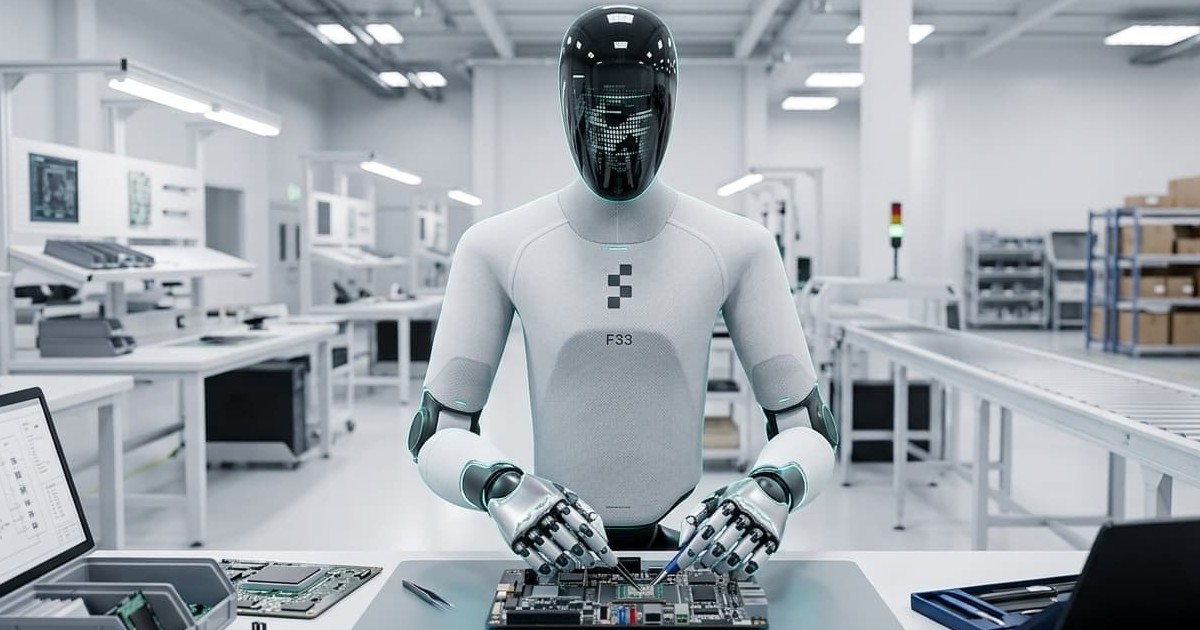

Physical AI Data Infrastructure
Real work. Real factories.
Robot-ready data.
Manipulation data from live production plants, delivered labelled, consented and ready for Vision-Language-Action training.
The problem
Humanoids are not short on compute. They are short on data that transfers.
Lab demonstrations do not survive the line
Policies trained on staged benches stall on a real floor, where there is takt pressure, clutter and part variants.
Hours of video are not the scarce input
Egocentric footage is cheap. The right task, bounded and labelled at the action level, is not.
The data that matters goes uncaptured
The skills humanoids need are performed every shift inside factories, and almost none of it is recorded.
Two ways to work with us
Bring us a task, or bring us your footage
Both routes return the same outputs, in the same formats.
We capture it for you
You define the task. We record real operators doing it inside a contracted network of production plants.
- Task-directed briefs, not opportunistic filming
- Our capture kits or cameras you supply
- Consent and provenance with every dataset
You already have the footage
Send the operator video you already hold and receive structured, training-ready datasets back.
- Works with the footage and cameras you have
- Same outputs and formats as sourced collection
- Quality scoring and redaction handled on our side
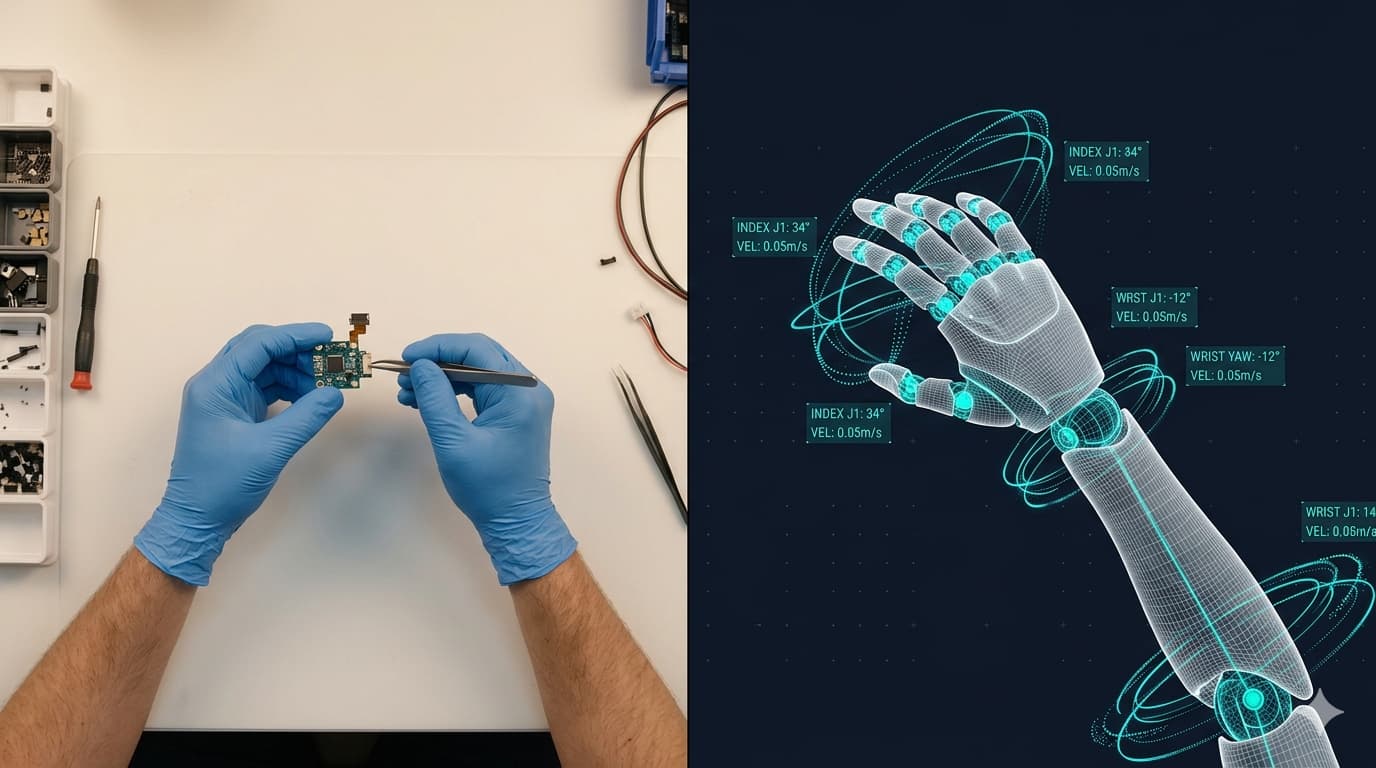
The factory network
A contracted factory network, ready to record
The hard part is getting inside a plant that is willing, prepared and legally clear to share its floor. That work is already done.
Contracted and ready
Plants already signed up for data sharing, so a request becomes a capture run.
Sectors and stations at scale
Multiple sectors and hundreds of work stations, so one brief can be filled across plants.
New tasks come online quickly
New plants and task types are added inside the framework that already exists.
Your hardware, if you want it
Capture runs on cameras you supply, through the same sensors your robot will use.
Consent, privacy and security
Built to survive a legal review
Operators consent explicitly and individually, and are compensated for taking part. Employers sign agreements covering scope, purpose, retention and downstream use.
Questions
Frequently asked questions
Where does the data come from?
Real operators doing real manufacturing work inside production plants, recorded against a task brief you define. Not staged, not teleoperated, not simulated.
How is consent handled?
Operators give explicit, informed and revocable consent as individuals, never bundled into employment terms, and are compensated for taking part. Consent and provenance documentation ships with every dataset.
Is the data exclusive?
Data captured against your brief can be scoped to you. Licensing terms are agreed before a run starts and written into the agreements with the plant and the operators.
How does real production data compare to simulation and teleoperation?
Simulation gives volume without contact realism. Teleoperation gives clean demonstrations at a cost that does not scale. Production capture gives the distribution the robot will be deployed into.
Tell us the task you need data for
Bring a skill you are training, or footage you already hold.
Talk to our team