
Physical AI Data Infrastructure
Real work. Real factories.
Robot-ready data.
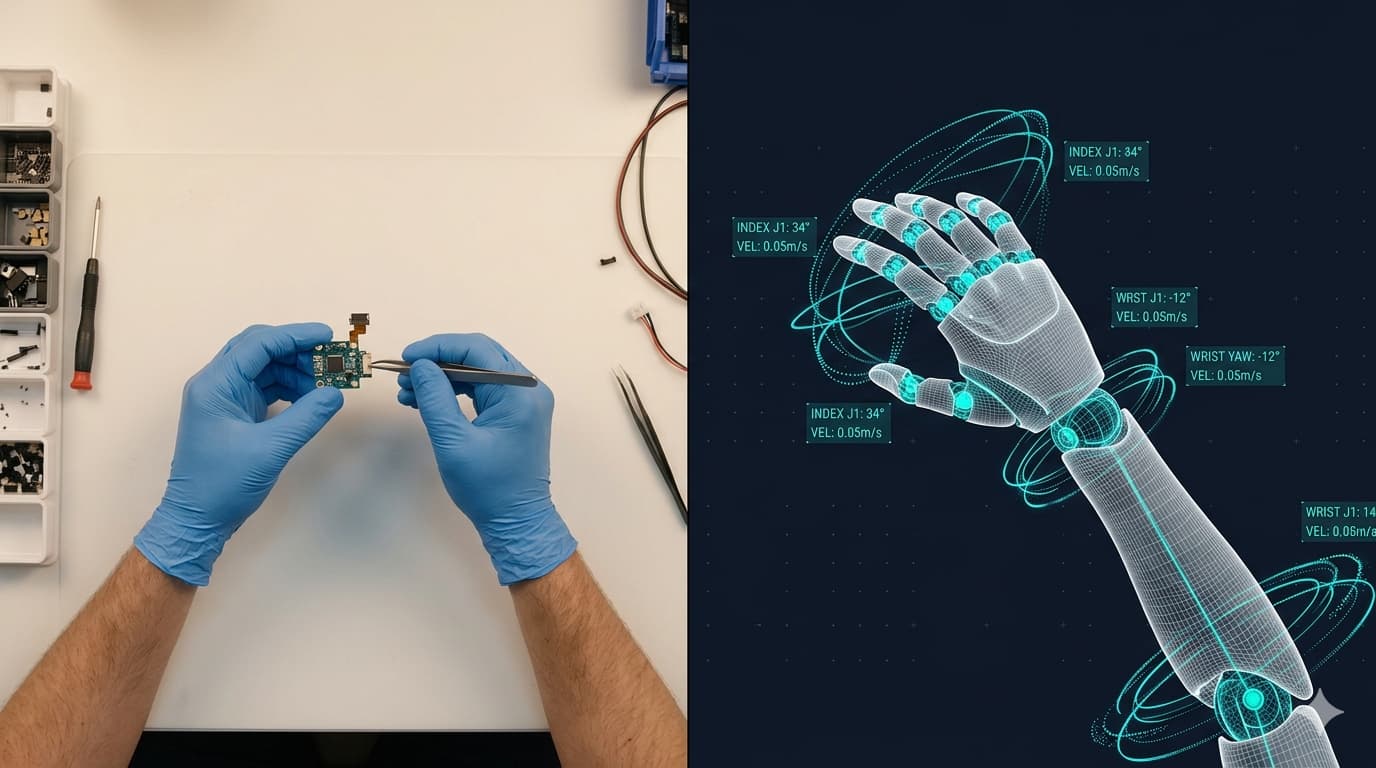
Khenda captures and structures task-directed manipulation data inside live production plants, and delivers it labelled, consented and ready for Vision-Language-Action training.
The problem
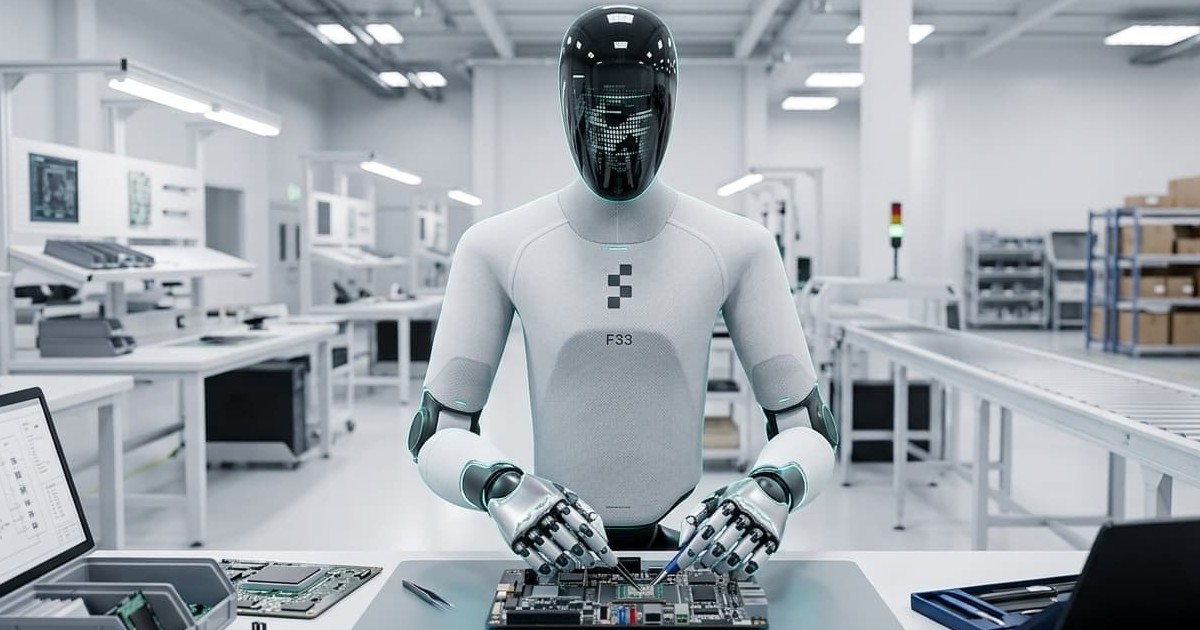
Humanoids are not short on compute. They are short on data that transfers.
Lab demonstrations do not survive the line
Policies trained on staged benches and teleoperated rigs meet a production floor and stall. Real work has takt pressure, cluttered fixtures, part variants and operators who have found a faster way to do it.
Unlabelled egocentric video is close to worthless
Head-mounted footage has become easy to gather and cheap to buy. Hours are not the scarce input. Hours of the right task, bounded and labelled at the action level, are.
The data that matters is happening right now, uncaptured
The manipulation skills humanoids need are performed every shift inside factories. Almost none of it is captured in a form that is usable for training or clean enough to license.
Two ways to work with us
Bring us a task, or bring us your footage
Most teams start with one and add the other. Both return the same structured outputs, in the same formats.
We capture it for you
We operate a large and growing network of production factories that are contracted and ready for data sharing. You define the task and the skills you need. We run task-directed egocentric capture of real operators doing real manufacturing work, on our capture kits or on hardware you supply, under a consent framework built with labour law counsel.
- Task-directed collection briefs, not opportunistic filming
- Capture on our kits or on your own hardware
- Multi-plant, multi-sector variety in a single brief
- Consent and provenance documentation with every dataset
You already have the footage
If you hold operator video already, send it to us and receive structured, training-ready datasets back. No new hardware on the line, no change to how your teams work, no new capture programme to stand up.
- Works with the footage and cameras you already have
- Same outputs and same formats as sourced collection
- Quality scoring and filtering applied before delivery
- Privacy flagging and redaction handled on our side

The factory network
A contracted factory network, ready to record
The hard part of production data is not processing it. It is getting inside a plant that is willing, prepared and legally clear to share what happens on its floor. That work is already done.
Contracted and ready
A large and growing network of production factories already signed up for data sharing. A request becomes a capture run, not a pilot search.
Sectors and stations at scale
The network spans multiple industrial sectors and hundreds of distinct work stations and process types, so a brief can be filled across plants rather than in one place.
New tasks come online quickly
New plants and new task types are added inside the existing framework. There is no model to renegotiate each time you want something different.
Your hardware, if you want it
Capture runs on our kits or on cameras you supply, so the data arrives through the same sensors your robot will use and the sensor gap disappears.
The output
What you receive
We describe what lands in your hands, not what happens before it. Every dataset ships as the same set of structured outputs, in the format your training stack already reads.
- Temporal action segments
- Every discrete action in the footage, with precise start and end boundaries.
- Task and action labels
- A task label and an action type on every segment, so a segment is usable without watching the video.
- Object and hand masks
- Segmentation masks for the hands and for the objects being handled.
- Interaction and contact events
- Where and when contact is made with an object, and when it is released.
- Hand and wrist trajectories
- Continuous hand and wrist paths through each action.
- Spatial motion data
- Derived from standard 2D video. No depth sensors and no motion capture suits are required on the line.
- Per-segment quality score
- A quality score on every segment, with unusable footage filtered out automatically before delivery.
- Privacy flags and redaction
- Sensitive segments are flagged and redaction is applied before a dataset leaves us.
Delivery formats
Datasets are delivered in HDF5, LeRobot or RLDS. If your team works to its own schema, we deliver to that instead.
Why it transfers
Production conditions are the training signal
A policy is only as good as the distribution it learned from. These are the properties a staged demonstration cannot reproduce.
Real cycle-time pressure
Operators work to takt. The motion you capture is the motion of someone who has to finish, not someone demonstrating.
Real clutter and variability
Mixed part variants, shared benches, tools left where they land, lighting that changes across a shift.
Real operator technique
The grips, regrasps and shortcuts people develop over years on one station, which is precisely the skill a robot needs to copy.
Task-directed collection
Capture runs against a brief you define, targeting the skills you are training, rather than filming whatever happens to be in frame.
Your sensors, your distribution
Capture on the hardware you supply, so training data and deployment data come through the same optics.
Breadth inside one task
The same task recorded across different plants, operators and part mixes, which is what makes a policy generalise rather than memorise.
Why factories work with us
Participating plants are not doing us a favour
A factory network only stays open if there is something in it for the factory. Every participating plant gets real operational value back, and the operators who take part are compensated.
A process improvement report, at no cost
Every participating plant receives a process improvement report produced from the same operator footage, covering the stations that took part.
An ergonomic analysis report, at no cost
Alongside it, an ergonomic analysis of the same work, which is the kind of study most plants have on a wish list and rarely fund.
Access to our process analysis platform
Participating plants get access to our commercially deployed process analysis platform for manufacturers.
Operators are compensated
Participation is voluntary and paid. Consent is given by the individual, never bundled into employment terms.
The line keeps running
Capture is designed not to disturb production. No station is rebuilt, no cycle is paused for us.
Consent, privacy and security
Built to survive a legal review
Operators consent explicitly and individually, and are compensated for taking part. Employers sign data agreements covering scope, purpose, retention and downstream use. The framework was developed with labour law counsel and is designed to be KVKK and GDPR compatible. We operate under SOC 2 Type II and ISO 27001.
Proven in production
This is not a research prototype
- Patent
- Granted U.S. Patent No. 12,450,905 B2, covering periodic and temporal action segmentation.
- Production footprint
- Our commercial platform runs inside production manufacturing plants today, across seven countries.
- Sector coverage
- Automotive, electronics, parts manufacturing, logistics, home appliances and heavy industry.
- Founded
- 2021, with offices in Ann Arbor and Istanbul.
- Certifications
- SOC 2 Type II and ISO 27001, with GDPR and KVKK compatible processes.
- Hardware
- Works with standard cameras. No depth sensors and no motion capture suits.
Who we build for
Three kinds of team, one input
Resources
The latest in humanoid robotics
Questions
Frequently asked questions
What is Khenda?
Khenda is a Physical AI data infrastructure company. We capture task-directed manipulation data inside live production plants and deliver it as structured, labelled datasets for Vision-Language-Action training. We also structure footage that buyers already hold.
Where does the data come from?
From real operators doing real manufacturing work inside production plants, recorded against a task brief you define. It is not staged, not teleoperated and not simulated.
What is the difference between sourced collection and structuring my own footage?
Sourced collection means we capture new data for you inside our factory network, against your brief. Structuring means you send footage you already hold and receive structured datasets back. The outputs and the delivery formats are the same either way.
Can you capture on our own hardware?
Yes. Capture runs on our kits or on cameras and rigs you supply. Recording through the sensors your robot will actually use removes a large part of the transfer gap.
How large is the factory network, and how quickly can a new task be added?
The network is large and growing, spanning multiple industrial sectors and hundreds of distinct work stations and process types. New plants and new task types are brought online inside the existing framework, so adding a task does not mean renegotiating the arrangement or starting a pilot search.
What exactly is in a dataset, and in what format?
Temporal action segments with precise start and end boundaries, task and action-type labels per segment, object and hand segmentation masks, interaction and contact events, hand and wrist trajectories, spatial motion data derived from standard 2D video, per-segment quality scoring, and privacy flags. Delivery is in HDF5, LeRobot or RLDS, or a schema you define.
How is consent handled, and will it survive an EU legal review?
Operators give explicit, informed and revocable consent as individuals, never bundled into employment terms, and are compensated for taking part. Employers sign agreements covering scope, purpose, retention and downstream use. The framework was developed with labour law counsel and is designed to be KVKK and GDPR compatible. Provenance and consent documentation accompanies each dataset so your compliance team has a file to review.
Do you need special sensors?
No. Spatial motion data is derived from standard 2D video. No depth sensors and no motion capture suits are required on the line.
Is the data exclusive?
Data captured against your brief can be scoped to you. Licensing terms are agreed before a collection run starts, and downstream use is written into the agreements with the plant and with the operators, so what you are allowed to do with the data is settled up front.
How does real production data compare to simulation and teleoperation?
Simulation gives you volume and no contact realism. Teleoperation gives you clean demonstrations of what an operator does when they know they are being recorded, at a cost that does not scale. Production capture gives you the distribution the robot will actually be deployed into: takt pressure, part variability, clutter and the technique operators developed to work around all three.
What do participating factories get in return?
Every participating plant receives a process improvement report and an ergonomic analysis report at no cost, produced from the same operator footage, plus access to our commercially deployed process analysis platform. Operators are compensated for their participation, and capture is designed not to disturb the line.
Tell us the task you need data for
Bring a skill you are trying to train, or a body of footage you already hold. We will tell you what we can deliver, in what format, and what the consent position looks like.
Talk to our team